
“We need a better copper grade” can mean several different things on a purchase request. The engineer may want a thicker wall. The fabricator may need a softer temper. The purchasing team may be asking about alloy chemistry. Those changes should not be hidden behind the same word.
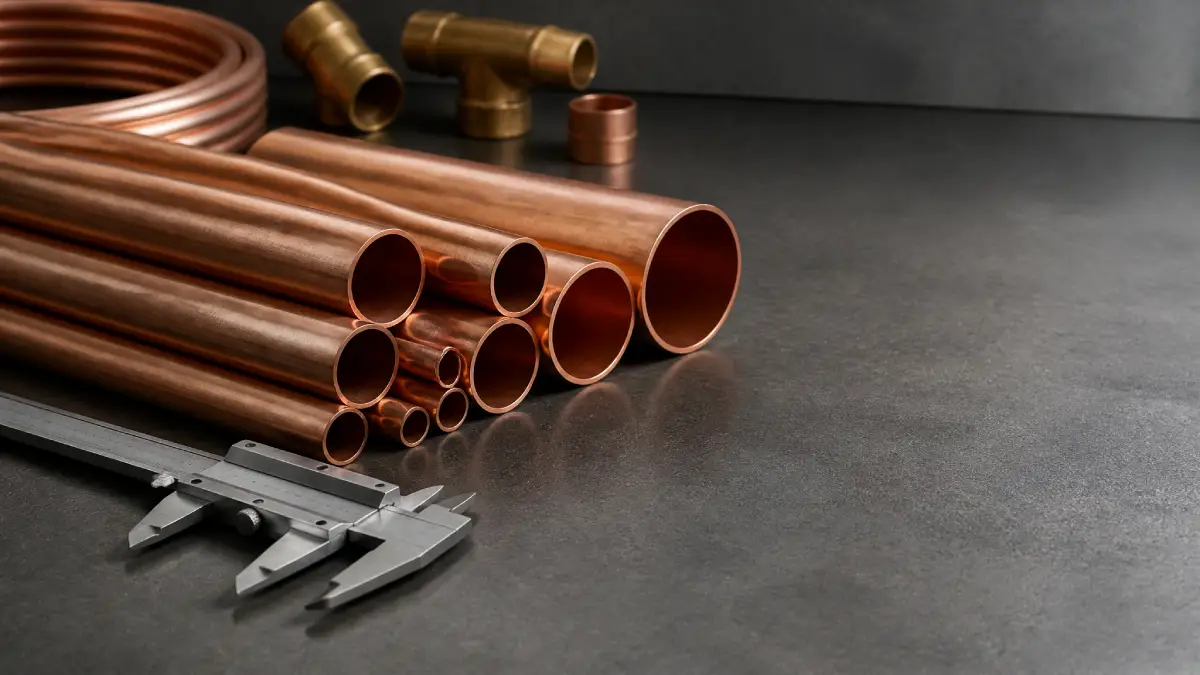
When buyers search for copper tube grades, Type K, Type L, and Type M often appear together. These are North American copper water-tube types associated with different wall thicknesses. They are not three purity grades, and they do not independently approve a product for a refrigerant circuit.
We separate those meanings below so an importer, contractor, or distributor can specify the property that actually matters to the job.
Executive Summary
- Treat alloy, wall type, temper, and application standard as separate fields.
- Compare K, L, and M at the same nominal size before assessing wall differences.
- Identify the actual outside diameter when matching tubes and fittings.
- Check the approved HVAC service specification before substituting a water-tube product.
What Copper Tube Grades Mean in a Specification
Alloy Names Describe Chemistry
An alloy designation such as C12200 identifies a copper alloy designation; it does not by itself define tube wall, temper, length, cleanliness, or application conformity. It does not tell the purchasing team the tube wall, supplied length, or material condition. A complete drawing needs those attributes separately.
For refrigeration purchasing, the ACR copper tube guide explains how the application specification adds requirements beyond an alloy name. Ask a bidder to identify the actual product offered rather than repeating “copper grade” across several unrelated fields.
A useful quotation review begins with a simple question: which requirement would change if this alternative were accepted? If the answer is wall thickness, call it a wall change. If it is temper, record the new material condition. Clear terminology makes the technical review smaller and helps prevent an apparently minor price adjustment from changing more than expected.
K, L, and M Describe Wall Series
At a given nominal water-tube size, Type K has a thicker wall than Type L, and Type L has a thicker wall than Type M. Their physical outside diameters follow the same nominal sizing convention. Their bores differ because the walls differ.
ASTM B88-22 is the seamless copper water-tube specification associated with these types. Keep the product family visible in the order, especially when the supplier also stocks ACR tubes identified by actual OD.
The distinction matters at receiving. A package marked with the correct nominal size can still contain the wrong tube type. Measuring only OD will not identify that wall-series difference. Confirm the relevant markings and the agreed wall inspection, then compare both with the order. Exterior appearance alone should not decide whether two products are equivalent.
Type K, L, and M Copper Tube Comparison
Compare the Same Physical Size
Mueller Streamline’s published copper-tube dimensional listing provides a useful example at a nominal 1/2 inch. All three types have a 0.625-inch OD, but their listed wall thicknesses differ. The table below uses those wall values and calculates ideal ID as OD minus twice the wall.
| Type at a nominal 1/2 inch. | Listed OD, inch | Listed wall, inch | Calculated ID, inch |
|---|---|---|---|
| K | 0.625 | 0.049 | 0.527 |
| L | 0.625 | 0.040 | 0.545 |
| M | 0.625 | 0.028 | 0.569 |
These are selected dimensional values, not pressure ratings or measured shipment results. Use the applicable standard and product documents for acceptance tolerances. We deliberately compare one nominal size so the wall difference remains clear without mixing diameter changes into the explanation.
For other dimensions, consult the copper tube size chart and the required product schedule. Do not extend a single wall value across every diameter in the same type.
Thicker Walls Change Several Decisions
A thicker wall changes bore geometry and material content at a fixed OD. It can also affect forming and connection preparation. Whether that is useful depends on the design requirements and the process that will make the finished assembly.
Suppose a buyer receives an alternative described as “an upgrade to a thicker tube.” We would ask for the revised wall specification and a technical review of the change. An upgrade label does not show whether a smaller bore or different forming response is acceptable.
Price comparisons should retain the same dimensional basis. If the alternative changes both nominal size and type, separate those changes before comparing cost. Otherwise, a purchasing team can attribute the difference to “grade” even though it is buying a different diameter and wall at the same time.
How Tube Type Differs From Copper Temper
Soft and Hard Are Separate Choices
“Annealed and drawn” describes material condition. A tube type such as L does not, by itself, tell the buyer every detail of that condition or the supplied form. Specify the recognized temper designation required by the selected product standard.
A fabricator reviewing a substitute needs to know whether its forming process remains suitable. The comparison between soft and hard copper tubing can help structure that discussion, but the actual drawing and tooling limitations remain the reference for approval.
We would not accept “same grade” as a complete answer when the workshop reports a different bending response. Check the alloy, wall, and temper independently. Each could explain a change, and each needs its own supporting information. This also helps identify whether the discrepancy is in the delivered material or in how the work was specified.
Joining Can Change the Design Assumption
The condition stated on the shipment is not always the condition relevant to the completed joint. CDA guidance says brazed or welded drawn tube requires the corresponding annealed pressure rating because joining heat softens it.
That is why you should assess the tube and joint together. A hard-tube description should not be used to bypass review of a heating or fabrication process. Ask the responsible technical reviewer which material condition and temperature assumptions govern the completed assembly.
Changes made in the workshop also need traceability. If an approved procedure includes forming or heating, retain that procedure with the drawing revision. Purchasing should not order one product while a later, undocumented operation changes the condition used in the design assessment. The inspector then has a clear basis for checking the finished component.
Which Copper Tube Type Fits an HVAC Application?
Identify the Fluid and Circuit First
HVAC includes more than refrigerant lines. A water circuit serving heating or cooling equipment raises a different set of product questions from the refrigerant circuit inside the same installation. “For HVAC” is therefore an incomplete service description.
Start by naming the fluid and the circuit’s function, then obtain the approved piping specification. The reviewer should establish the required material, operating envelope, and joining system. The purchasing team can then request the corresponding tube product without guessing from the building’s equipment name.
For a mixed mechanical project, create separate schedule items for water piping and refrigerant piping even when they appear physically similar. We recommend keeping those items distinct through storage and issue to the job. A shared rack label saying “copper for HVAC” makes the installer responsible for resolving a decision that should already be documented.
ACR Suitability Requires More Than a Letter
Type K, L, or M alone does not demonstrate the internal condition or full conformity required for a specific refrigerant application. The actual product must meet the project’s approved specification. Avoid either a blanket approval or a blanket rejection based only on a letter.
For buyers reviewing the copper tube product range, the relevant question is which offered item satisfies the intended service and documentation requirements. Matching an OD can be useful for identification, but it cannot establish the rest of the product’s suitability.
Ask the supplier to identify the exact conformity statement, material condition, and delivery requirements included in the offer. If the proposal changes product family, send that change back for technical acceptance. The quotation should show the deviation openly so it does not enter the order as an unnoticed substitute.
Common Errors When Comparing Copper Tube Grades
Nominal Sizes Can Hide a Connection Mismatch
A nominal 1/2-inch North American water tube has a different physical diameter from a 1/2-inch OD ACR tube. This naming difference can create a fitting mismatch even before wall type is considered. Preserve actual OD in the connection schedule.
Use the following distinctions when reviewing abbreviated supplier descriptions:
| Description | What it identifies | What is still missing? |
|---|---|---|
| C12200 | Alloy designation | Dimensions, temperature, and product standard |
| Type L | Water-tube type | Nominal size and other order details |
| Annealed | Material condition | Alloy, dimensions, and service requirements |
| ACR | Application family | Complete product and system specification |
Our purchasing recommendation is to avoid a single “grade” column that stores all four kinds of information. Separate fields make it easier to compare offers, manage stock codes, and explain an approved substitution to the warehouse.
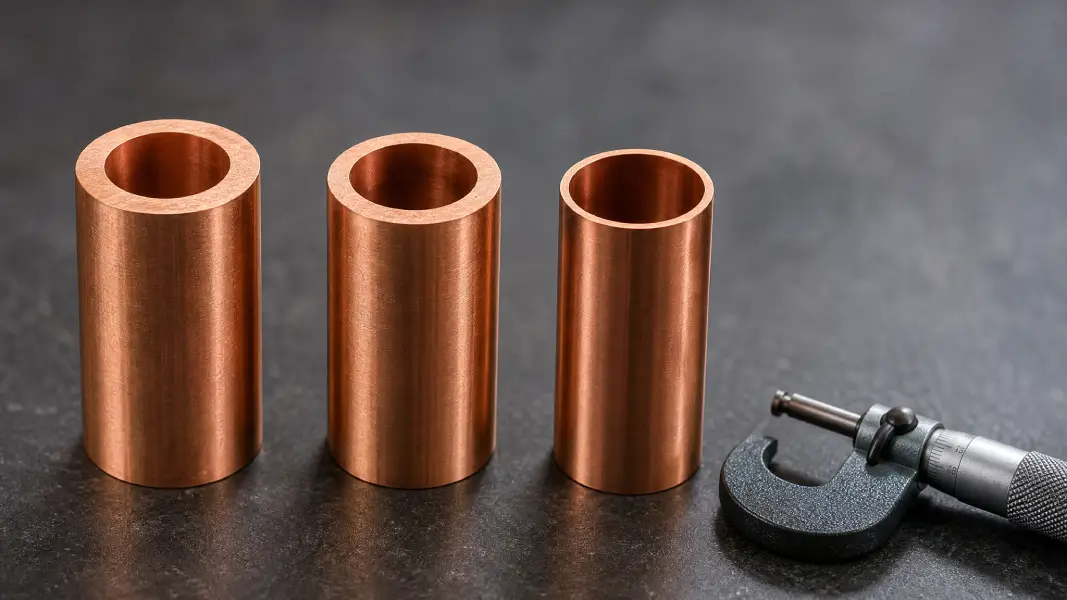
Labels Need Supporting Information
Markings help identify material, but a copied label or generic certificate does not establish every requirement of a shipment. Link the product description and agreed inspection evidence to the supplied batch.
- Check that the standard and product type match the order.
- Compare nominal size and actual connection diameter.
- Verify the specified wall and material condition.
- Investigate missing or inconsistent identification before release.
For an unclear package, record the discrepancy rather than guessing from weight or appearance. A supplier may be able to resolve a paperwork error, while a dimensional mismatch requires a different response. Keeping those findings separate helps avoid both unnecessary rejection and unsupported acceptance of material that has not been identified correctly.
How to Specify Copper Tube Grades in an RFQ
State the Requirement Behind the Name
For Nexnice inquiries, explain the service and include the approved schedule when available. A short technical description is more useful than asking for the “best grade,” because the required product depends on the actual application.
- Name the fluid, circuit, and applicable project specification.
- State alloy, tube type, dimensions, and temper in separate fields.
- Define lengths, quantities, supplied form, and end protection.
- Request relevant inspection records and clear deviation reporting.
If purchasing is still collecting budget prices, mark unresolved fields as preliminary. This keeps a supplier’s assumption from appearing to be an engineering decision. Once the design is approved, replace the preliminary description with a controlled item specification before ordering the material for installation.
Review Substitutions and Repeat Orders
Repeat purchases can drift away from the approved description when only the commercial shorthand is retained. Keep the original technical requirement with the item code and review proposed changes against it.
- Identify every changed attribute in the alternative offer.
- Obtain the required technical review for the intended service.
- Update the order and receiving criteria together.
- Preserve the approval with the relevant drawing revision.
A more expensive tube is not automatically the correct substitute. The comparison should show that the alternative meets the requirements that matter to the finished assembly. We would also check whether the supplied form or documentation changes the work needed after delivery. Those practical differences can affect acceptance even when the basic dimensions appear satisfactory.
For distributors, separate stock codes can prevent confusion between products that share a familiar nominal size. Include the wall type and material condition in the stored description. When an order serves more than one project, retain the customer’s specification reference so the warehouse can issue the intended material without interpreting engineering requirements at dispatch.
Specify the Property You Need
Use alloy names for chemistry, K/L/M for the relevant water-tube wall series, and temper designations for material condition. Connect all of them to the intended service and approved dimensions. That wording gives the supplier a defined product to quote and gives the buyer a clearer basis for acceptance.
Frequently Asked Questions
Are Type K, L, and M different copper purities?
No. These designations identify copper water-tube types with different wall thicknesses at the same nominal size. Alloy chemistry is a separate requirement. State the alloy, type, dimensions, and material condition individually so a supplier can identify the exact product requested.
Which is thicker, Type K or Type L?
Type K has a thicker wall than Type L at the same nominal size. Compare matching sizes because wall values change across the size series. The thicker wall also changes the bore, so selection should follow the project’s approved requirements.
Is Type M copper always unsuitable for HVAC?
That statement is too broad because HVAC includes different fluids and circuits. Identify the service and follow its approved material specification. A water-tube type label alone does not establish suitability for a particular refrigerant system or its required internal condition.
Does Type L mean hard copper?
No. Tube type and temper describe different attributes. Type L identifies a water-tube wall series, while annealed or drawn describes material condition. Check the applicable product specification and quotation because the type name does not fully define how the tube is supplied.
Can I replace the specified tube with a thicker type?
Only after the required technical review accepts the substitution. A thicker wall changes bore geometry and can affect fabrication and cost. Record the proposed dimensions, condition, and service conformity rather than assuming that extra wall thickness makes every substitution acceptable.
Request a Quote
Send Nexnice the tube type or alloy requirement, dimensions, temper, quantity, and intended service. Attach the approved specification where available. Request a copper tube quotation with those details to discuss a clearly defined product and any proposed alternatives.