
A supplier receives a request for copper tubing for a five-room cooling project. The buyer provides the room count and total capacity but no model combination or route drawing. There is enough information to discuss the project, yet too little to approve a pipe schedule.
To choose copper tube size for HVAC and refrigeration, start with the exact equipment and its permitted piping arrangement. Then translate those requirements into identified route segments, dimensions, and purchase quantities. A generic capacity chart cannot settle every installation condition.
We approach the task as a coordination exercise between design, installation, and purchasing. The supplier needs a defined product schedule; the technical reviewer needs enough system information to approve that schedule.
Executive Summary
- Identify the exact equipment combination and applicable manufacturer instructions.
- Record route lengths, vertical separation, and branch arrangement.
- Assign dimensions to individual segments instead of using one pair for the whole project.
- Review material, wall, insulation, and connection requirements alongside OD.
- Document substitutions and route changes before updating the purchase order.
What Information Determines HVAC Copper Tube Size?
Begin With the Equipment Combination
Record the outdoor unit model and the connected indoor equipment. Include the manufacturer’s approved combination where the system requires one. A product family name or nominal capacity can leave out differences relevant to the installation instructions.
Ask which manual revision applies to the equipment being supplied. Keep that reference with the project documents so purchasing and installation use the same instructions. If equipment changes during procurement, review the pipe schedule before assuming the previous dimensions remain acceptable.
For a supplier conversation, we recommend sending the approved equipment schedule rather than a collection of product photographs. Model numbers should be readable and complete. This gives the technical reviewer a reliable starting point and reduces the risk that a quotation is based on a similar-looking unit with different requirements.
Define Service Conditions and Project Responsibilities
The circuit’s refrigerant and operating requirements belong in the technical brief. The selected tube also needs the required product specification, material condition, and wall. OD alone does not describe the complete product or its suitability.
Clarify who approves the piping design and who confirms product conformity. A manufacturer can quote tubing against a schedule, while system approval depends on the responsible project reviewer and the equipment requirements. Keep those responsibilities visible when discussing alternatives.
If the intended application is still being developed, request a budget offer with explicit assumptions. Avoid allowing a supplier’s tentative size suggestion to become an approved engineering decision simply because it appears in a quotation. The final order should identify the accepted schedule and any conditions attached to it.
How Piping Routes Affect Copper Tube Selection
Record Length and Vertical Separation
Measure the planned route rather than estimating only the straight distance between units. Include the changes of direction and the information the manufacturer requires for its length checks. Some instructions distinguish actual developed length from equivalent length.
Vertical separation is another field. Record its direction and the equipment positions as required by the applicable instructions. A single total length cannot describe a route that crosses several levels and serves multiple branches.
We would put the route on a drawing with segment identifiers. Those identifiers can then carry through the calculations and bill of materials. Our copper tube size guide covers dimensional interpretation; this selection step connects those dimensions to their location in the approved installation.
Respect Branch and Oil-Return Requirements
Branch locations and the equipment served downstream can affect the permitted piping arrangement. Review the manufacturer’s rules for the actual system. An installation should not gain extra loops or altered branches merely because spare tubing is available.
Daikin’s published VRV piping guide explains that many piping limitations are connected to oil return to the compressor. This is a useful public example of why routing requirements have a functional purpose. It does not make that product series’ detailed limits universal.
When a site obstruction changes the route, send the revised drawing for review before cutting new material. We recommend showing the change clearly, including any added rise, drop or branch relocation. The purchasing team can then update quantities after the technical decision, with a record of why the schedule changed.
Build a Segment-by-Segment Copper Pipe Schedule
Separate Main Runs and Branch Connections
A system with several indoor units may have different piping requirements in different locations. Do not assume that the outdoor unit connection sizes apply everywhere. Read the manufacturer’s instructions for each category of segment.
Daikin’s RXSQ24TBVJUA, RXSQ36TBVJUA, and RXSQ48TBVJUA installation manual separates outdoor-to-branch piping, piping between branch kits and indoor connections. Section 7-6 is a documented example of this structure. The purchasing lesson is to retain those distinctions in the material schedule.
Give every segment an identifier that matches the drawing. A supplier should be able to see which dimensions and lengths belong to which part of the route. The installation team can use the same identifiers when issuing material, checking delivered quantities or reporting a proposed change.
Turn Design Data Into Purchasing Fields
Use a schedule that contains technical identity and commercial quantity without confusing them. The example below is a structure for recording approved information, not a set of recommended pipe sizes.
| Schedule field | Information to record | Purchasing purpose |
|---|---|---|
| Segment ID | Drawing location or route reference | Trace material to its intended use |
| Required tube | Approved OD, wall, and condition | Define the product to quote |
| Installed length | Reviewed route quantity | Support the technical schedule |
| Purchase quantity | Supplied lengths and agreed allowance | Plan delivery and cutting |
| Associated items | Insulation, fittings, and protection | Complete the order scope |
We would retain installed length separately from purchased quantity. Material allowed for cutting or spare stock is not permission to extend the installed route. That distinction helps prevent the commercial allowance from being mistaken for a design change.
Check Tube Dimensions and Product Requirements
Confirm the Sizing Convention
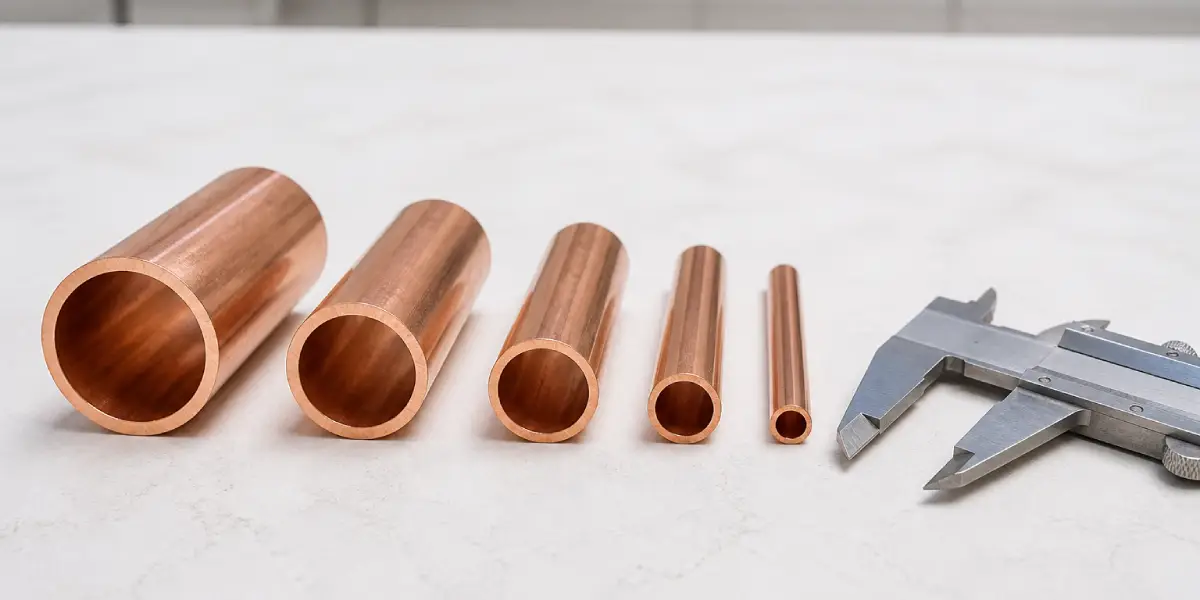
Use the actual outside diameter when identifying the ACR tube and its connections. If a specification or supplier description uses a nominal water-tube size, resolve that naming difference before comparing products. Fractional labels alone can be misleading across product families.
Our copper tube size chart explains conversions and bore calculations. Keep the controlling dimensional units in the order so a rounded millimeter value does not become an unintended second acceptance limit.
For a hypothetical drawing review, a 1/2-inch OD requirement means a designated 12.70 mm OD. A nominal 1/2-inch North American water-tube description points to a different physical diameter. Correct that ambiguity at the schedule stage, before the buyer orders fittings or the warehouse creates a stock code from the shortened description.
Review Wall, Material, and Connections
Once the OD is established, review the rest of the product requirements. The selected wall and material condition must satisfy the approved design and fabrication requirements. A matching diameter cannot establish working-pressure suitability or joint compatibility.
The ACR copper tube buying guide explains how product conformity and internal delivery condition fit into the purchase review. Ask the supplier to identify any departure from the approved description, even when the substitute is presented as a familiar refrigeration product.
Connections deserve their own check. Confirm the fitting or prepared-end requirements and the intended installation process. If the scope includes preformed ends, identify who accepts them and what protection is needed in transit. This helps keep the supplied assembly consistent with the installation plan instead of leaving connection details to an assumption at delivery.
Include Insulation and Installation Access
Check the Finished Pipe Envelope.
Copper OD determines the tube connection, while the insulated assembly determines much of the space needed for routing and supports. Check both before selecting covers or planning a fixed penetration.
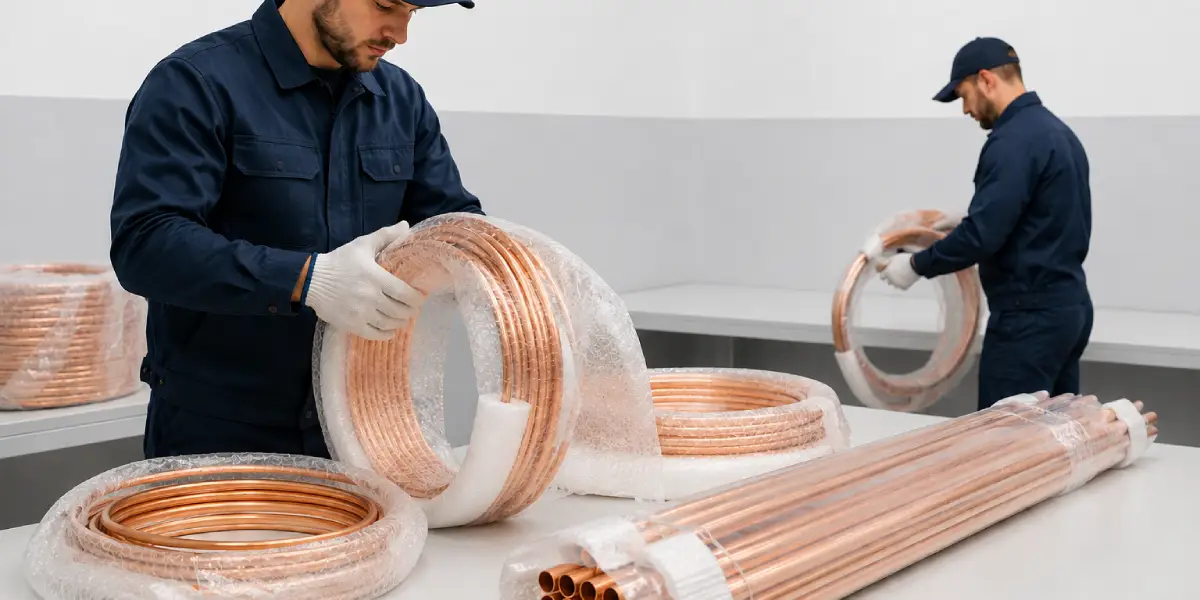
For insulated copper pair coils, define each copper leg, the insulation requirement, and the supplied length. Ask for the relevant finished dimensions where a bundle must pass through a constrained opening. Seams, jackets, or the connection between paired sleeves can affect the envelope.
We recommend reviewing those dimensions with the installation team while the route is still adjustable. A correct copper size does not prevent an access problem if the finished product cannot be installed without damaging its insulation. Select insulation against the approved thermal and environmental requirements rather than choosing the thinnest covering that fits the available space.
Plan Bending and Joining Access
The route must leave room for the approved tools and installation method. A line drawn neatly around a corner does not prove that the required bend can be made in the available space. Check access before choosing the supplied form.
For a hypothetical service corridor, compare installing a continuous coil with bringing in straight sections and completing the required joints. Record tool clearance, support access, and the handling path for each proposal. The technical reviewer can then assess the arrangement, while purchasing compares the corresponding material and delivery needs.
We would also ask how the tube and insulation will be protected during nearby construction work. Access planning is part of preserving the specified product after delivery. Keep any field change connected to the drawing revision so inspection can determine whether the installed route matches the accepted arrangement.
Frequently Asked Questions
Can HVAC capacity alone determine copper tube size?
No. Capacity is only part of the information needed. Use the exact equipment combination and manufacturer’s piping requirements because route length, vertical separation, branches, and connection arrangements can affect the approved sizes used on different segments of the system.
Can I use a larger refrigeration pipe to be safe?
Do not assume that a larger diameter is an acceptable precaution. It changes the piping geometry and may depart from the equipment requirements. Have the responsible reviewer assess the proposed size against the actual route and operating requirements before ordering.
Should every branch use the outdoor connection size?
No. Some systems specify different requirements for main piping, branches, and indoor connections. Read the relevant instructions for each segment and retain those distinctions in the pipe schedule. One connection size does not define the complete installation.
Does extra purchased tubing allow a longer installed route?
No. Purchase allowance covers the agreed commercial and cutting needs; the installed route must remain within the approved design. Keep the two quantities separate because additional installed length can require a technical review and changes to the system requirements.
What information should a tube supplier receive?
Send the approved pipe schedule with dimensions, wall, material condition, lengths, and quantities. Include the product standard, insulation, connection and documentation requirements. Equipment and drawing references help explain the application, while the controlled schedule defines what the supplier should quote.
Request a Quote
Send Nexnice your approved HVAC or refrigeration tube schedule and destination requirements. Include insulation and connection details where they form part of the order. Request a project copper tube quotation to discuss the specified materials and any items that need clarification.